 Jerusalem Israel Tours
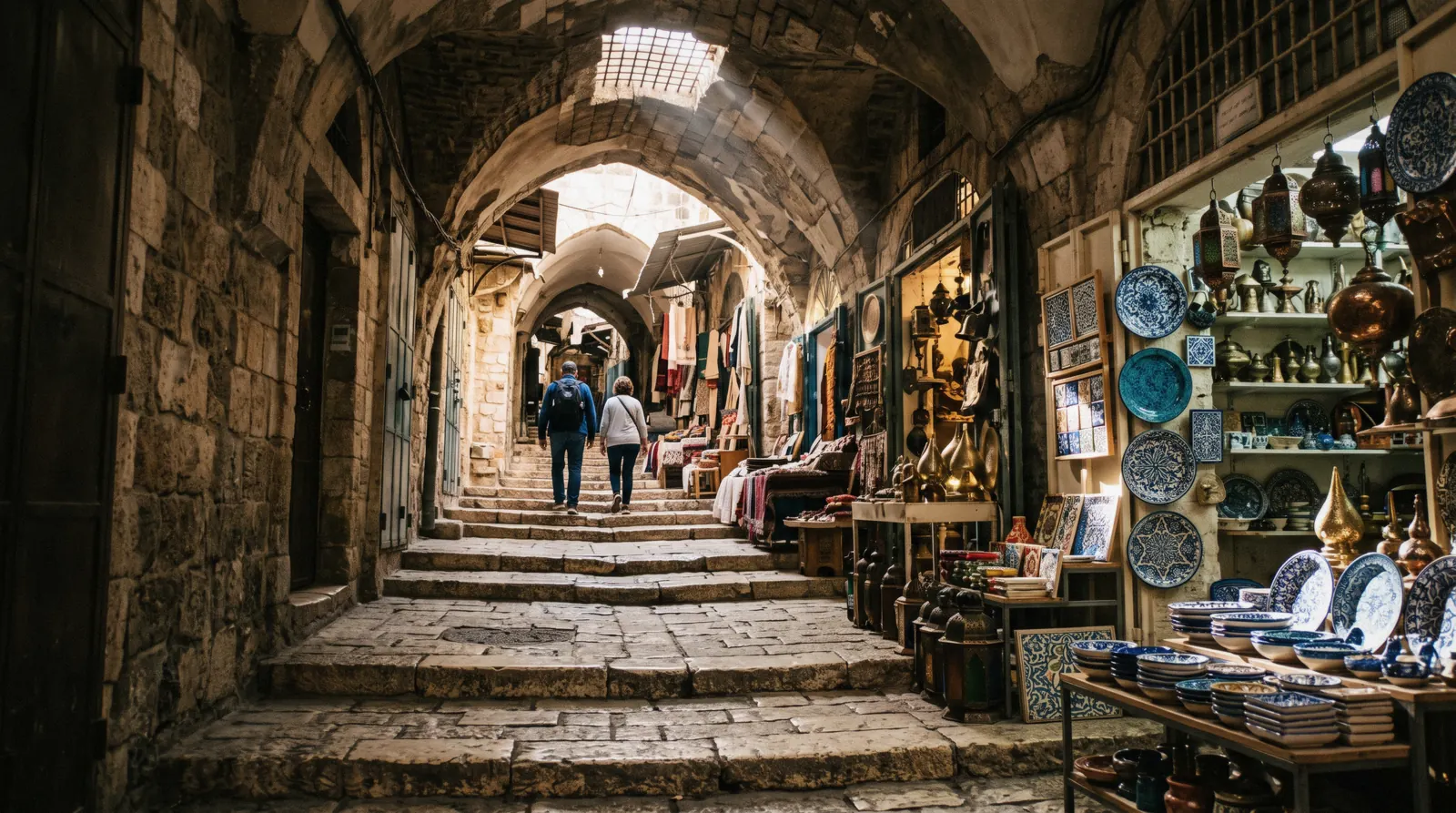
The Jerusalem Old City is a 0.9 square kilometre walled area holding sites at the centre of three world religions. Most visitors see it on a guided walk from Jaffa Gate, and the choice of tour matters more than the choice of site. This guide compares the four walks you can book and shows what you can cover on your own. For the full shortlist, see the top Jerusalem tours.
Quick answer The Old City in brief
The Old City is a 0.9 square kilometre walled area in Jerusalem, added to the UNESCO World Heritage list in 1981. Its current walls and gates were built by the Ottoman Empire from 1535 to 1542 under Suleiman the Magnificent. It holds the Western Wall, the Church of the Holy Sepulchre and the Temple Mount plateau, and people live and work inside it today.
Key takeaways
- The classic visit is a guided walking tour from Jaffa Gate covering the Western Wall, the Via Dolorosa and the Holy Sepulchre in four hours.
- Walking the streets yourself is free. See the Church of the Holy Sepulchre and the Western Wall guides before you go.
- For a private option, the four quarters tour with a personal guide runs five hours for your group only.
Key facts
Opening hours
| Old City streets and gates | Open at all hours |
|---|---|
| Church of the Holy Sepulchre | 05:00–20:45 |
Closed The walled city is open at all hours. Inside it, the Church of the Holy Sepulchre runs summer hours 05:00 to 20:45, and the Temple Mount plateau is closed to non-Muslim visitors on Fridays, Saturdays and various holidays
Admission
- Adult
- Free, the Old City is a living city of open streets
- Reduced
- Basilica of Saint Anne and the Pools of Bethesda 12 NIS ($3.88), students 10 NIS
- Free
- Streets, the Western Wall plaza, the Church of the Holy Sepulchre, the Via Dolorosa
Planning it
- Time needed
- Our estimate: half a day for the main sights, a full day with all four quarters
- Book ahead
- Optional — walk-up usually fine
- Address
- Old City, Jerusalem, entered through seven open gates, main visitor gate Jaffa Gate
Which Old City tour to book
All four walks start at Jaffa Gate and cover the same core sights, so the choice comes down to group size, pace and time of day. Prices are per booking as listed on the platform.
Do you want a shared group, a private guide, or the city at sunset?
| Option | Price | Length | Includes | Book |
|---|---|---|---|---|
| Jerusalem: Guided Walking Tour of the Old CityFirst visit, best-reviewed shared walk, the default pick | from $57 | 4 hours | Live guide on foot, Western Wall, Via Dolorosa, Holy Sepulchre, no entry fees on the route | Check Availability |
| Old City of Jerusalem Guided Walking TourSame route with the Temple Mount in the listed itinerary, groups up to 30 | from $58 | 4 hours | Holy Sepulchre, Temple Mount or viewpoint, Western Wall, Via Dolorosa and the souk, guide on foot | Check Availability |
| Jerusalem Old City Four Quarters tourFamilies or groups of up to six who want a private guide and a slower pace | from $500 per group | 5 hours | Private licensed guide, all four quarters, Holy Sepulchre, Western Wall, Upper Room, Pools of Bethesda optional at about $3 | Check Availability |
| Jerusalem After Dark: Old City Sunset Walking Tour & WineAnyone already planning a night in the city who wants cooler air and fewer crowds | from $99 | 3 hours | Rooftop sunset, a glass of wine, Western Wall and Holy Sepulchre by night | Check Availability |
Every tour offers free cancellation up to 24 hours before the start. Figures current in Q4 2026.
All Old City walking tours
Every guided walk of the Old City you can book on this site, all meeting at or near Jaffa Gate.
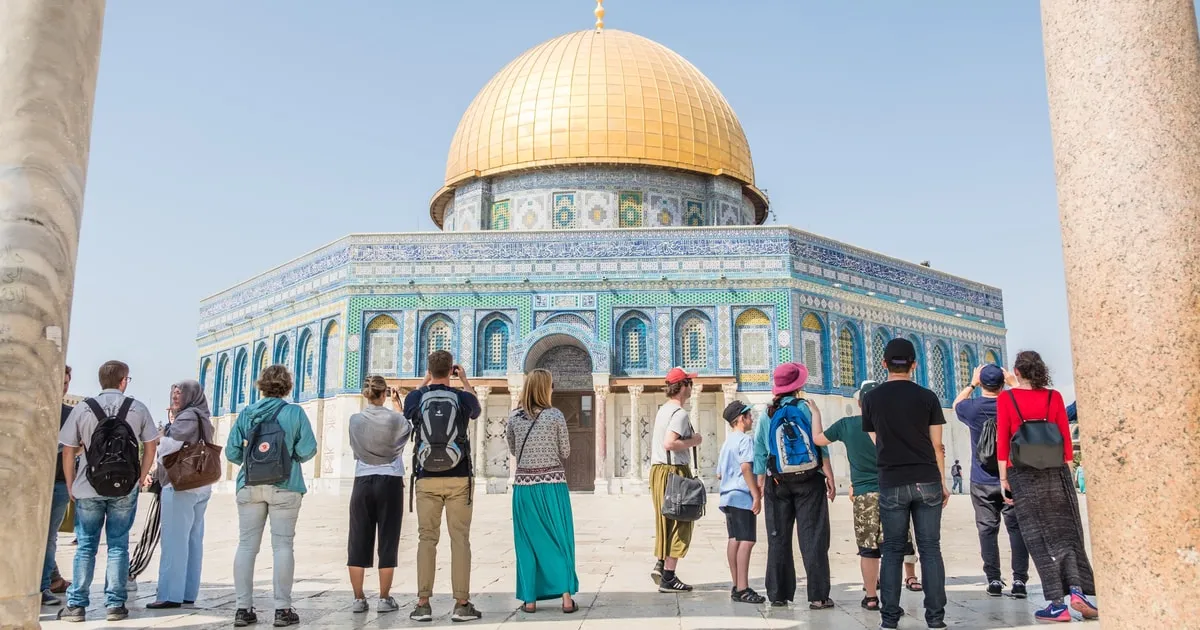 from $57
Top rated
Jerusalem: Guided Walking Tour of the Old City
Four hours on foot from Jaffa Gate: the Western Wall, the Via Dolorosa and the Church of the Holy Sepulchre with a live guide.
Check Availability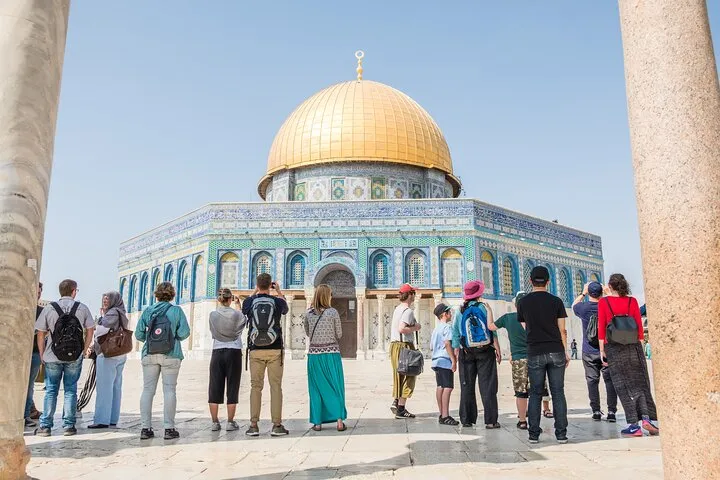 from $58
Same route on Viator
Old City of Jerusalem Guided Walking Tour
The Holy Sepulchre, the Temple Mount, the Western Wall, the Via Dolorosa and the souk in four hours from Jaffa Gate.
Check Availability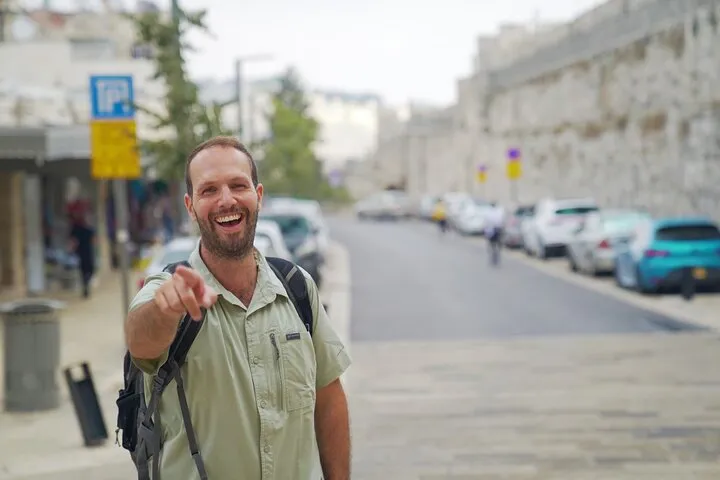 from $500
Private, per group
Jerusalem Old City Four Quarters tour
A private guide for five hours through all four quarters, the Holy Sepulchre, the Western Wall and the Upper Room.
Check Availability from $99
Evening
Jerusalem After Dark: Old City Sunset Walking Tour & Wine
An evening walk through the Old City with a rooftop sunset and a glass of wine, the Western Wall and the Holy Sepulchre by night.
Check AvailabilityPrices, ratings and details are the platform's own. dollar figures are the listed prices — the platform bills in your account's currency.
What the Old City is and why it matters
A short orientation before you choose a route, so the streets make sense when you reach them.
A walled city within a city
The Old City is a 0.9 square kilometre walled area, small enough to cross on foot in well under an hour. Its present walls and gates were built by the Ottoman Empire between 1535 and 1542 under Suleiman the Magnificent. Seven gates stand open today, and Jaffa Gate on the west side is where almost every tour and most visitors begin.
In a tradition that may have started with a British map of the 1840s, the city is divided into four uneven quarters: the Muslim Quarter, the Christian Quarter, the Armenian Quarter and the Jewish Quarter. A fifth area is the Temple Mount, known in Arabic as Haram al-Sharif, the plateau of the Dome of the Rock and the Al-Aqsa Mosque.
The name is slightly misleading. Archaeologists believe the original settlement core of ancient Jerusalem lay on the rocky spur south of the plateau, where the City of David excavations now sit. The walled Old City as Suleiman built it sits a little north of the ancient city, which had spread much wider at its peak.
- UNESCO World Heritage Site since 1981, listed together with the walls
- Four quarters plus the Temple Mount plateau
- Main visitor entrances: Jaffa Gate, Damascus Gate, Dung Gate, Lions' Gate
- About 0.9 square kilometres, walkable end to end
Three faiths, one square kilometre
The Old City holds sites of central importance to Judaism, Christianity and Islam. The Western Wall is a retained section of the ancient retaining wall of the Temple Mount plateau and a place of Jewish prayer. The Church of the Holy Sepulchre is for Christians the site of the crucifixion, burial and resurrection of Jesus. Muslims revere the plateau above as the place of the Dome of the Rock and the Al-Aqsa Mosque.
People live in all four quarters. The Jewish Quarter held around 19,000 Jewish residents in the early 20th century, was razed in the 1948 war and rebuilt after 1967, and housed around 3,000 residents and 1,500 students as of 2013. The Armenian Quarter is the oldest living diaspora community outside Armenia, dating to Armenian monks who settled here in the 4th century. The Christian Quarter contains about 40 Christian holy places. This is a working city of homes, schools and shops, not an open-air museum, which is why dress and quiet conduct matter here more than at most attractions.
What you see, in walking order
The natural route from Jaffa Gate that nearly every guided walk follows, with what each stop is.
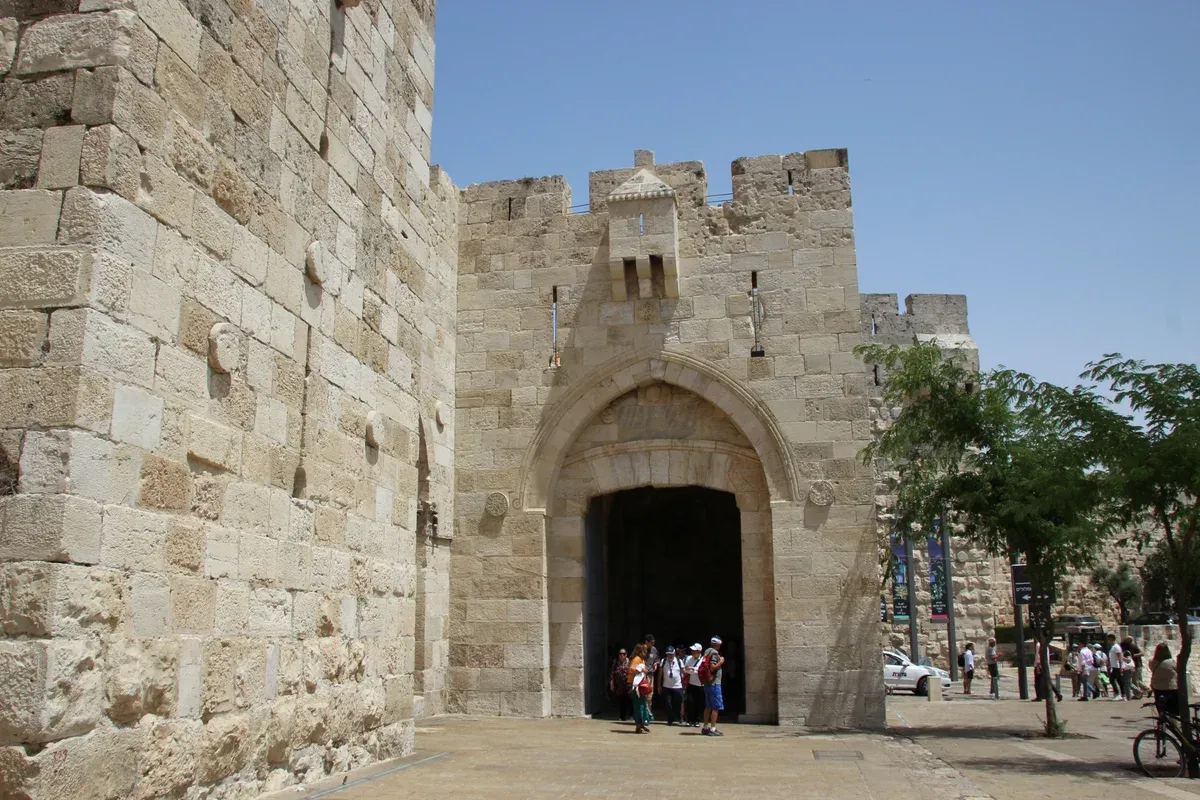
Jaffa Gate, the main western entrance to the Old City and the usual meeting point for walking tours. Photo: Gary Todd from Xinzheng, China, CC0, via Wikimedia Commons
From Jaffa Gate to the Western Wall
Jaffa Gate is an Ottoman gate from 1538 with an L-shaped entryway, a defensive design meant to slow attackers. Travellers and pilgrims arriving from the port of Jaffa ended their journey here, which gave the gate its name. Beside it a wide breach in the wall was cut in 1898 so the German emperor Wilhelm II could enter by carriage, and cars still use that gap today.
Inside the gate the Tower of David, also called the Citadel, stands immediately to your right. The citadel you see dates to the Mamluk and Ottoman periods, built on the site of much older Hasmonean, Herodian and Byzantine fortifications. It now houses the Tower of David Jerusalem Museum, and its courtyard hosts the Night Spectacular sound-and-light show.
From Jaffa Gate the main route runs east through the Armenian Quarter and the Jewish Quarter, past the Cardo, the north-south main street of the Roman and Byzantine city. The quarter was systematically destroyed after its surrender in the 1948 war and rebuilt from the 1970s, with excavations that uncovered the Broad Wall, the Burnt House and the Byzantine Cardo. The route ends at the Western Wall plaza at the foot of the Temple Mount. Entry to the plaza is free and open to all, with modest dress required.
| Stop | What it is | Practical line |
|---|---|---|
| Jaffa Gate | Ottoman gate of 1538, classic starting point | Most tours meet just outside it |
| Tower of David | Ancient citadel, now a museum | Museum closed on part of Sunday mornings, opens 12:00 that day |
| Jewish Quarter and Cardo | Rebuilt quarter over Roman and First and Second Temple remains | Free to walk, some sites charge |
| Western Wall | Retaining wall of the Temple Mount, Jewish prayer site | Free, modest dress, security check at the plaza entrance |
Up to the plateau and across to the Holy Sepulchre
From the Western Wall plaza, non-Muslim visitors can reach the Temple Mount plateau through the Mughrabi Gate, the bridge by the plaza, during limited morning and early-afternoon hours from Sunday to Thursday. It is closed to visitors on Fridays, Saturdays and various Muslim and Jewish holidays, and can close at short notice, so check on the day. Visitors stay in the open courtyards and do not enter the buildings.
The route then turns north through the Muslim Quarter along the Via Dolorosa, the street route tradition associates with the path of Jesus to crucifixion, marked by fourteen stations. It ends at the Church of the Holy Sepulchre in the Christian Quarter, which Christians venerate as the site of the crucifixion and the tomb. Entry is free. Six denominations share the church under fixed arrangements, which explains the crowded and busy interior.
Most guided walks then loop back through the souk markets to Jaffa Gate. On your own, the Austrian Pilgrim Hospice on the Via Dolorosa has a rooftop terrace for 5 NIS ($1.62), open daily 10:00 to 22:00, which is the best cheap viewpoint inside the walls.
Hours, dress and quiet times
The city never closes, but the sites inside it do, and the rules of dress and conduct are enforced.
Opening hours that matter
The streets and gates of the Old City are open at all hours. The sites inside them are not, and the differences shape your day.
The Church of the Holy Sepulchre opens 05:00 to 20:45 in summer, closes 20:00 in October, runs 04:00 to 19:00 in winter and closes 19:30 in March. A Franciscan procession takes place daily at 17:00 in summer and 16:00 in winter. Special hours apply on Catholic and Orthodox Good Friday and Orthodox Holy Saturday. Saint Anne and the Pools of Bethesda at the start of the Via Dolorosa cost 12 NIS ($3.88), students 10 NIS, open Monday to Saturday 08:00 to 12:00 and 14:00 to 16:00, closed Sunday. The Temple Mount plateau takes non-Muslim visitors only Sunday to Thursday in limited hours, and closes to them on Fridays, Saturdays and various holidays, sometimes at short notice.
Shabbat runs from Friday sunset to Saturday nightfall. Public transport largely stops for it, though the churches of the Old City stay open, and the light rail ends early on Friday and does not run on Saturday. Plan arrival and departure around this.
- Holy Sepulchre: 05:00 to 20:45 in summer, quietest right at opening
- Temple Mount plateau: Sunday to Thursday only for visitors, no exact printed hours, check on the day
- Saint Anne and Pools of Bethesda: closed Sunday
- Friday evening into Saturday: city streets busy with religious life, transport reduced
Dress and conduct
Modest dress is required at the Western Wall and on the Temple Mount plateau: covered shoulders and knees, and head covering for men at the Wall. The same standard is sensible anywhere in the Old City and is required on ultra-Orthodox neighbourhood tours elsewhere in Jerusalem.
All four quarters are residential. The Christian Quarter counts about 40 Christian holy places and still has a resident Christian community, though numbers have dwindled. Keep voices down in narrow residential lanes, ask before photographing worshippers, and follow any sign restricting photography inside the churches. Guides on the walking tours handle these boundaries for you, which is one quiet argument for booking one on a first visit. The quietest time in the lanes, our estimate, is early morning before 09:00 or after 18:00, when tour groups thin out and the shop shutters start to come down.
Getting there
Jaffa Gate is the practical entrance for almost everyone, and reaching it is simple from most of Jerusalem.
Reaching Jaffa Gate
Jaffa Gate sits at the western edge of the walls, where Jaffa Road meets the Old City. From the west you approach through Mamilla Mall, a pedestrian shopping street that runs from the city centre straight to the gate, roughly a ten minute walk from the light rail stop near City Hall, our estimate.
The Jerusalem light rail Line L1 runs from Mount Herzl past the Central Bus Station, Mahane Yehuda and Jaffa Road to near Damascus Gate. Pay with a Rav-Kav card or an approved app, the validators take no bank cards and there are no paper tickets. Damascus Gate is the northern entrance, useful if you are starting at the Via Dolorosa or the Garden Tomb outside the walls. For the Western Wall and the City of David, Dung Gate in the south is the closest entrance.
Travellers arriving from the coast can take the Israel Railways train to Jerusalem Yitzhak Navon station next to the Central Bus Station, about 35 to 45 minutes from Tel Aviv, every 30 minutes Sunday to Thursday and hourly on Friday until early afternoon, with no trains from Friday afternoon until after dark on Saturday. From the station, the light rail or a walk through Mamilla brings you to Jaffa Gate. More detail is in our guide to getting around Jerusalem.
| Entrance | Best for | How to reach it |
|---|---|---|
| Jaffa Gate | All guided tours, Tower of David | Walk down Jaffa Road or Mamilla Mall, light rail to City Hall then about 10 minutes on foot, our estimate |
| Damascus Gate | Via Dolorosa, Muslim Quarter, Garden Tomb | Light rail Line L1 stop near the gate |
| Dung Gate | Western Wall, Temple Mount plateau, City of David | Walk in from Jaffa Gate through the quarters, or by taxi to the gate |
Tours that collect you
If you would rather not navigate, several tours include hotel pickup in Jerusalem. Full-day city tours such as the full-day Jerusalem tour with entry fees collect you at your hotel and drop you back. Private Old City tours can meet you at your hotel lobby and start walking from there.
For a first morning in the city, meeting a guide at Jaffa Gate remains the simplest option, because the gate is signposted from everywhere and impossible to miss. See our page on where to stay in Jerusalem if you want to be within walking distance of the walls.
How much time to give it
You can skim the Old City in half a day or give it two days, depending on how deep you go.
Choosing your routing
The walls contain perhaps a dozen major stops, and no one sees all of them well in one visit. A shared four-hour walk covers the spine of the city at a comfortable pace. A five-hour private walk adds the Armenian Quarter, the Upper Room on Mount Zion and a slower look at the quarters. Doing it alone costs nothing but takes planning, since the Holy Sepulchre alone rewards an unhurried hour.
Our pick for a first visit is the guided walking tour from Jaffa Gate: four hours, 4.8 stars from 423 reviews, and a guide who manages the dress rules, the security lines and the Temple Mount closure on Fridays and Saturdays. Return later in your trip for the City of David south of Dung Gate or a walk down the Mount of Olives. If you only have one day in Jerusalem overall, our one-day Jerusalem itinerary fits the Old City into a wider plan.
| Routing | Time | Covers | Best for |
|---|---|---|---|
| Shared walking tour | 4 hours | Jaffa Gate, Western Wall, Via Dolorosa, Holy Sepulchre, souk, with a guide | First visit, no planning needed, our pick |
| Private five-hour walk | 5 hours | All four quarters plus Holy Sepulchre, Western Wall and Upper Room at your own pace | Families and groups of up to six, deeper questions |
| Self-guided loop | Our estimate: 5 to 6 hours | Jaffa Gate, Jewish Quarter and Cardo, Western Wall, plateau viewpoint, Via Dolorosa, Holy Sepulchre, souk on foot for free | Confident walkers on a budget, starting early |
How the Old City came to look like this
Seven dated steps that explain the walls, the quarters and the gates you will walk through.
-
Bronze and Iron Ages
The first city rises south of today's walls
Most archaeologists place the original settlement core of Jerusalem on the spur now called the City of David, south of the Temple Mount.
-
4th century CE
Armenian monks settle in Jerusalem
Armenia adopts Christianity as a national religion and monks establish the community that grew into the Armenian Quarter, the oldest living diaspora community outside Armenia.
-
1535 to 1542
Suleiman the Magnificent builds the walls
The Ottoman Empire constructs the current walls and city gates that still define the Old City.
-
1538
Jaffa Gate opens with an L-shaped entry
The L-shaped defensive design slowed attackers, and the gate took its name from pilgrims arriving from the port of Jaffa.
-
1898
A breach is cut for an emperor
Ottoman authorities open the wall beside Jaffa Gate so German emperor Wilhelm II can enter by carriage, and cars still enter through that gap.
-
1948
The Jewish Quarter is destroyed
After fighting in the 1948 war the quarter surrendered, the Hurva synagogue was blown up and the quarter was pillaged and razed.
-
1967 onwards
Reconstruction and excavation
A large-scale rebuilding of the Jewish Quarter uncovers the Israelite Tower, the Broad Wall, the Burnt House, the Herodian Quarter and the Byzantine Cardo, and the Hurva Synagogue is rededicated in 2010.
-
1981
UNESCO listing
The Old City and its walls are added to the UNESCO World Heritage Site list.
Sources: Wikipedia articles on the Old City of Jerusalem, Jaffa Gate, the Jewish Quarter, the Armenian Quarter and the Tower of David.
Old City dos and don'ts
Do
- Wear clothes that cover shoulders and knees, required at the Western Wall and the Temple Mount plateau.
- Book a guided walk for your first visit, it saves negotiating the security lines and the plateau closure rules alone.
- Start at Jaffa Gate, every main route and most tours begin there.
- Check on the day before planning to visit the Temple Mount plateau, closures can happen at short notice.
- Go early, our estimate is that before 09:00 the Via Dolorosa and the Holy Sepulchre are far calmer.
- Carry small cash in shekels for sites like the Austrian Hospice rooftop at 5 NIS ($1.62).
Don't
- Do not plan a plateau visit on Friday or Saturday, it is closed to non-Muslim visitors on those days and on various holidays.
- Do not photograph worshippers or religious processions without asking first.
- Do not expect to drive inside the walls, cars enter only through the 1898 breach and parking is outside.
- Do not visit Saint Anne on a Sunday, it is closed.
- Do not rely on public transport on Saturday, the light rail does not run and the market and some museums close for Shabbat.
- Do not try to see all four quarters in one rushed hour, the city rewards half a day at minimum.
Five things most visitors do not know
Small facts that change how you read the streets once you know them.
A short list worth reading before you walk
The Old City rewards a little background. These five points come straight from the historical record and from the site rules, and each one has a practical consequence for your visit.
- The current layout is not the ancient city. Most archaeologists believe the original settlement core lay on the spur south of the Temple Mount, where the City of David excavations now stand, so the walled Old City sits slightly north of where ancient Jerusalem peaked. Wikipedia, Old City of Jerusalem
- The wide gap next to Jaffa Gate was cut in 1898 so German emperor Wilhelm II could enter the city by carriage, and it is why cars can reach the Old City from the west today. Wikipedia, Jaffa Gate
- The four-quarter division is a tradition that may have begun with a British map of the city in the 1840s, not an ancient arrangement. Wikipedia, Old City of Jerusalem
- The Jewish Quarter holds two historic mosques, the Sidna Omar and the Al Dissi, both closed since 1967. Wikipedia, Jewish Quarter
- The Tower of David took its name from a Herodian tower in the 5th century CE, and only since 1967 has it officially referred to the entire citadel, including the 17th-century minaret visitors photograph as the tower. Wikipedia, Tower of David
Old City map
The main entrance and the stops that matter, all within the walls or a short walk from them.
- 1 Jaffa GateThe 1538 Ottoman gate where nearly every walking tour meets.
- 2 Tower of DavidThe ancient citadel by Jaffa Gate, now a museum with a sound-and-light show.
- 3 Western WallThe Jewish prayer site at the foot of the Temple Mount, free to enter with modest dress.
- 4 Temple MountThe plateau of the Dome of the Rock and the Al-Aqsa Mosque, open to non-Muslim visitors Sunday to Thursday only.
- 5 Via DolorosaThe street route of the fourteen stations ending at the Holy Sepulchre.
- 6 Church of the Holy SepulchreThe church Christians venerate as the site of the crucifixion and the tomb, free entry, open from early morning.
Numbers match the pins on the map.
Near the Old City
Three places that pair naturally with a walk in the walls, all close enough for the same day or the next.
City of David
The archaeological site of the original settlement core of Jerusalem, just south of the walls. Self-guided entry starts at 16 NIS ($5.18), or take the City of David day tour from your hotel.
Our estimate: 10 minutes from Dung Gate Read the guideMount of Olives
The ridge east of the Old City with Gethsemane, the Church of All Nations and the city's best panoramic view. The Mount of Olives guided tour meets at Jaffa Gate and walks down.
Our estimate: 15 minutes from Lions' Gate Read the guideMahane Yehuda Market
Jerusalem's main market, a world away from the holy sites and best near lunchtime. Note it closes for Shabbat, so go before Friday sunset, details in our market guide.
Our estimate: 25 minutes from Jaffa Gate, or two light rail stops Read the guideOld City questions
What is the Old City of Jerusalem famous for?
It holds sites of central importance to Judaism, Christianity and Islam: the Western Wall and the Temple Mount plateau, and the Church of the Holy Sepulchre, all inside 0.9 square kilometres of Ottoman-era walls. The walls and gates themselves date to 1535 to 1542, and the whole area is on the UNESCO World Heritage list. Most visitors cover it on a guided walk.
Does anyone live in the Old City of Jerusalem?
Yes, all four quarters are residential. The Jewish Quarter had around 3,000 residents and 1,500 students as of 2013, the Armenian Quarter around 2,000 residents served by its monastery institutions, and the Christian Quarter still has a resident Christian community. Treat the lanes as neighbourhoods, keep quiet in residential stretches and ask before photographing people.
How long does it take to walk around the Old City of Jerusalem?
The walled area is only 0.9 square kilometres, so an end-to-end circuit of the walls is short, and our estimate for the standard sightseeing loop from Jaffa Gate through the Western Wall, the Via Dolorosa and the Holy Sepulchre is four to six hours. Guided walks run four hours, private five-hour tours go slower and deeper.
What is the Old City of Jerusalem now?
It is a living, inhabited part of Jerusalem, not a museum site, listed by UNESCO since 1981 together with its walls. Shops, schools, homes and houses of worship all operate inside it, and it is the city's main sightseeing district. Entry is free at all hours through seven open gates, with Jaffa Gate the main visitor entrance.
Why is the Old City of Jerusalem important to three religions?
Jewish tradition holds the Western Wall, a retained section of the ancient Temple Mount retaining wall, as a place of prayer. Christians venerate the Church of the Holy Sepulchre as the site of the crucifixion and burial of Jesus. Muslims revere the Temple Mount plateau as the site of the Dome of the Rock and the Al-Aqsa Mosque. Our Holy Sepulchre guide covers the church in detail.
Do I need a ticket to enter the Old City?
No. The streets, gates and the Western Wall plaza are free, and the Church of the Holy Sepulchre is free. Paid sites inside include Saint Anne and the Pools of Bethesda at 12 NIS ($3.88) and the Austrian Hospice rooftop at 5 NIS ($1.62). Guided walks are booked separately, see the tour comparison.
Where do the walking tours start?
Every one of the tours here start at or just outside Jaffa Gate. The shared walks meet at the gate itself, one guide waits on a stone bench outside in a green shirt, and the private tour guide holds a sign with your name. Arrive ten minutes early, our estimate, since the gate area is busy.
When is the Old City closed to visitors?
The streets are open at all hours, but the Temple Mount plateau is closed to non-Muslim visitors on Fridays, Saturdays and various Muslim and Jewish holidays, sometimes at short notice, so check on the day. Saint Anne closes on Sundays. During Shabbat, public transport stops, though the churches stay open. Our best time to visit page covers seasons and weather.
Prices, hours and terms are set by the venue or operator and confirmed at checkout.
We may earn a commission if you book through one of our links, at no extra cost to you. Full affiliate disclosure